The structure of a layer cake, from support to decor
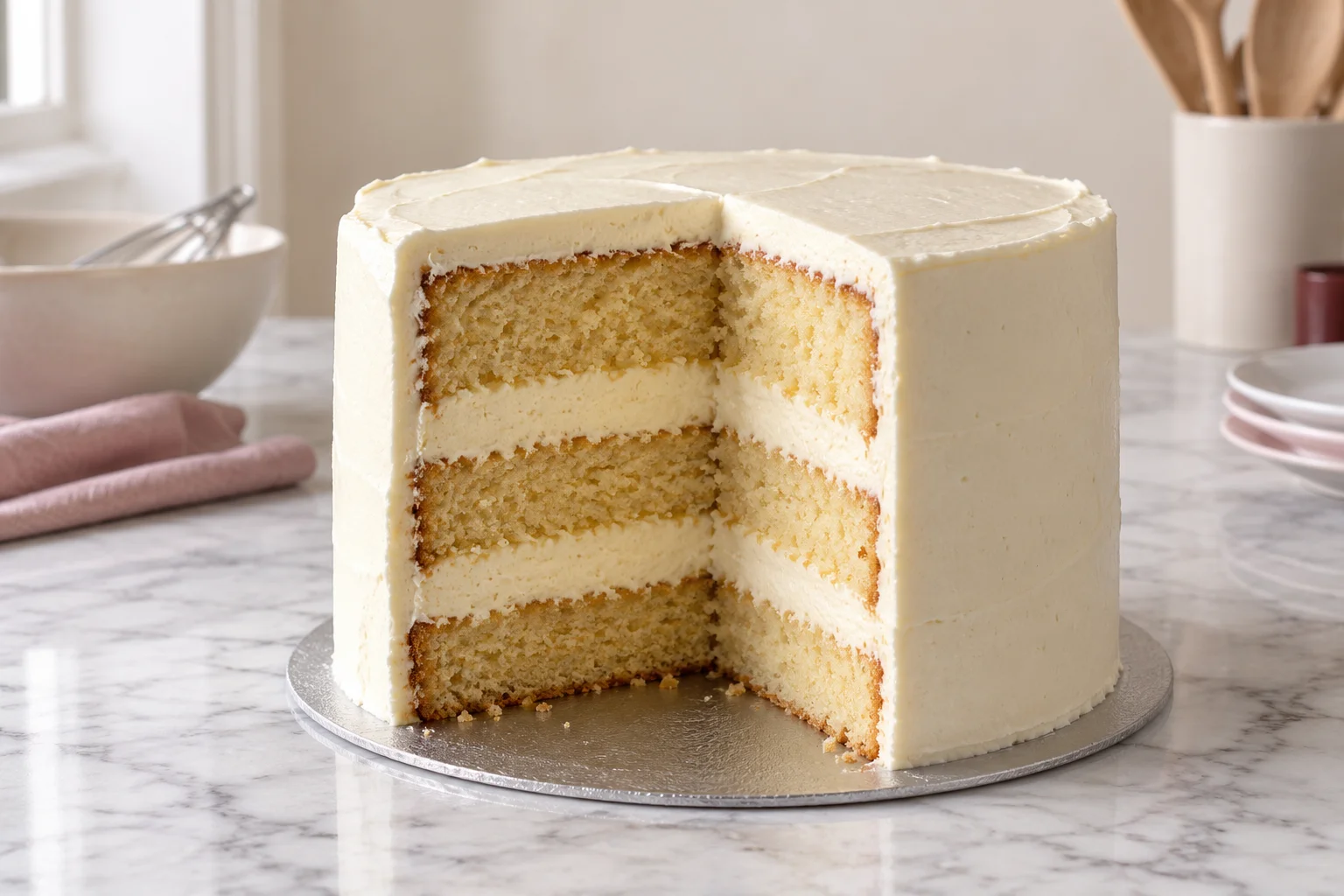
Read a cut cake to understand what makes it hold: support, fastening, sponge layers, dams, filling, underlayer and blanket.
At the end of this lesson
- Name in order the elements of a layer cake, from support to decor.
- Give the typical thickness of each layer for a 15 cm cake.
- Distinguish layers and floors and know when an internal support becomes necessary.
The cut, from bottom to top
A layer cake reads like a building: each element rests on the one below and must bear it.
- Presenter or serving dish: it touches the cake only through the cake board.
- Cake board (cake board): rigid disk of the diameter of the cake, which allows to move it without twisting it.
- Fastening point: a cream hazelnut that prevents the sponge cake from slipping on the cake board.
- Lower sponge cake: the most stable layer, often the most regular.
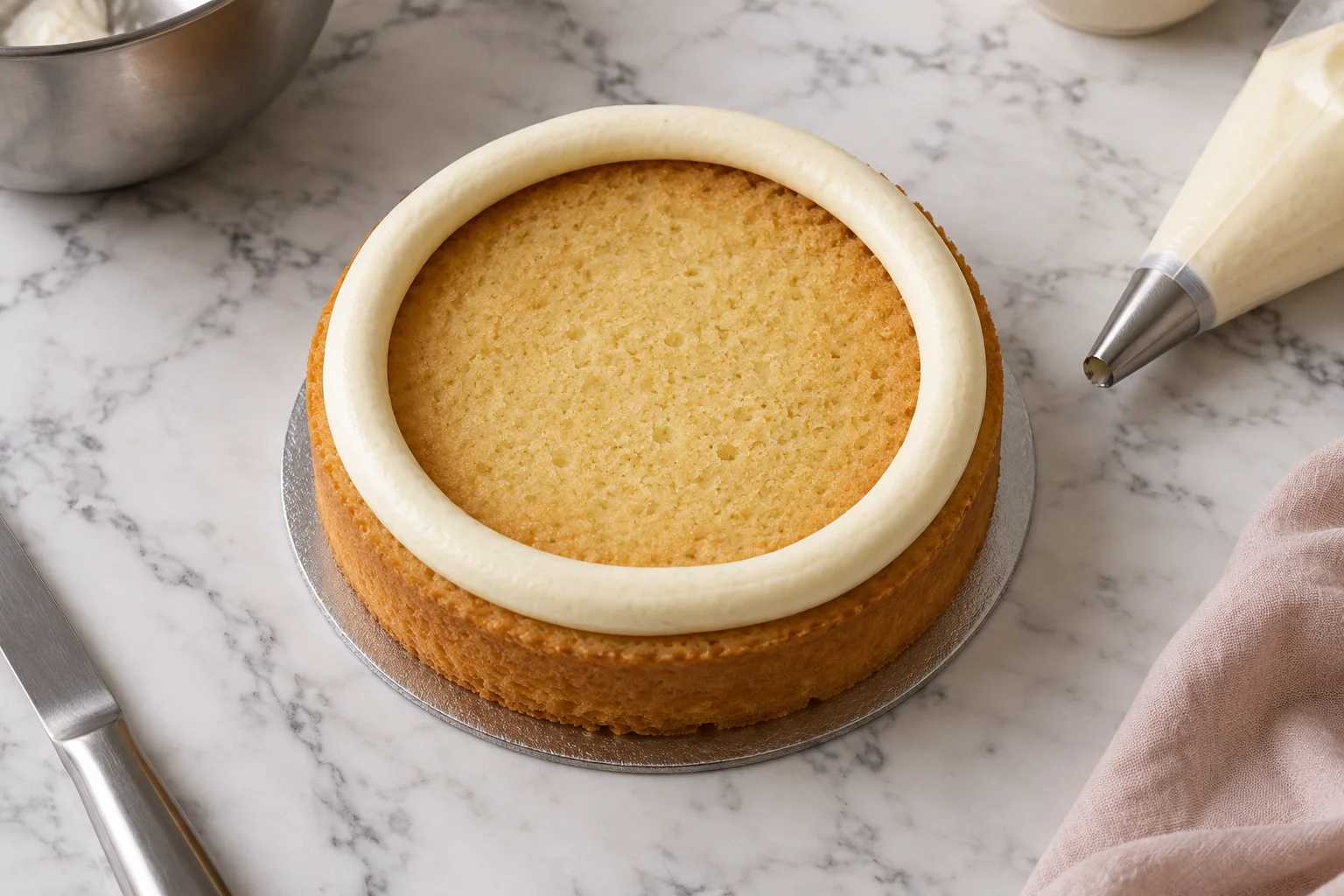
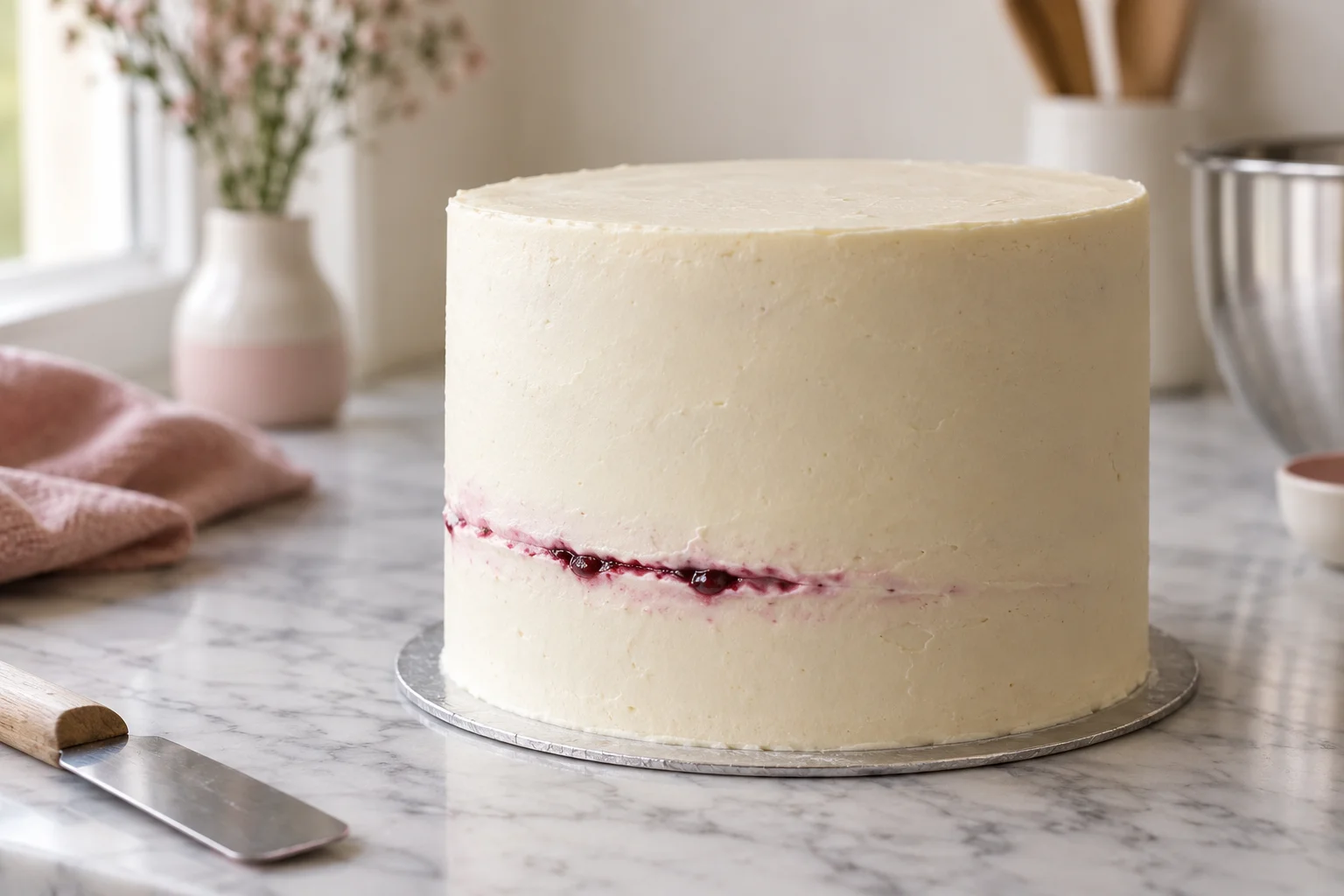
- Barrage (boudin): firm cream cord poached at the edge, essential if the lining is soft (curded, compote).
- Garnish: cream, ganache, fruit or insert, in regular thickness.
- Next sponge layers, then sponge cake from the top placed smooth face (side mold bottom) upwards.
- Undercoat (crumb coat): film that traps crumbs.
- Final cover: smooth layer that gives shape.
- Decor: placed last, on an already straight base.
Reference thicknesses for a 15 cm
These values are starting points. They are measured against the rule during testing and are noted in the notebook.
| Element | Typical thickness | Commentary |
|---|---|---|
| Sponge cake | 2 to 3 cm | Equalized, without dome |
| Filling | 0.8 to 1.5 cm | Finer if the cream is very rich |
| Dam | 1 cm wide | Same cream as the blanket, closes |
| Underlayer | 1 to 2 mm | The sponge cake can be seen |
| Cream cover | 3 to 5 mm | Thicker = more sugar in the mouth |
| Sugar paste ganache cover | 3 to 5 mm | Close and straight base |
Layers and floors: two words, two problems
Three discs on the floor form a single floor. Putting a second full cake above creates a floor cake: the weight of the top must then be taken over by stems and an intermediate cake board, never by cream. For a very high cake, the height is not enough to decide the supports: also evaluate the weight, width, trim and transport, then follow a documented assembly. Module 20 details the intermediate cake boards and rods.
What makes a cake hold
The outfit is based on three conditions: flat supports (equalized sponge layers), toppings that do not flow at working temperature, and a cold passage that firmens the whole before covering. A thicker cream never corrects an inclined base: it hides it for a while, then distorts it.
Sheet or notebook · Pencil and ruler · Three 15 cm paper discs · Two strips of colored paper to display the filling
No ingredients for the model. · For real observation: a part of layer cake from the business or home, to cut clean.
Draw the cut
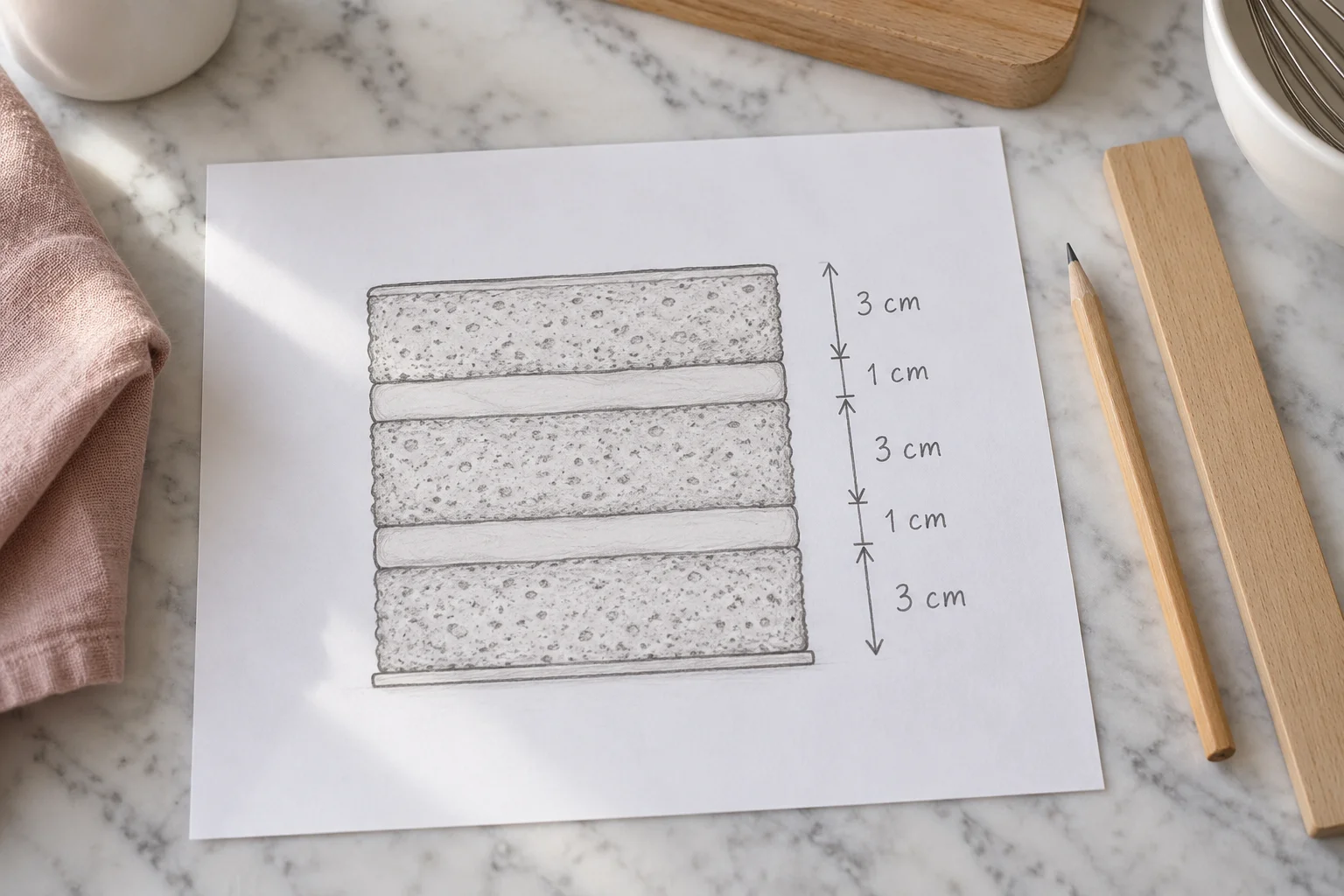
Draw a rectangle that is 15 cm wide. From bottom to top, draw the cake board, three 2.5 cm wide sponge strips, two 1 cm wide filling strips, then a thin outline (lining) and a thick outline (covering).
Legend Each Layer
Write next to each band its name, thickness and function: volume, taste, crumb capture, protection, finish.
Build the model
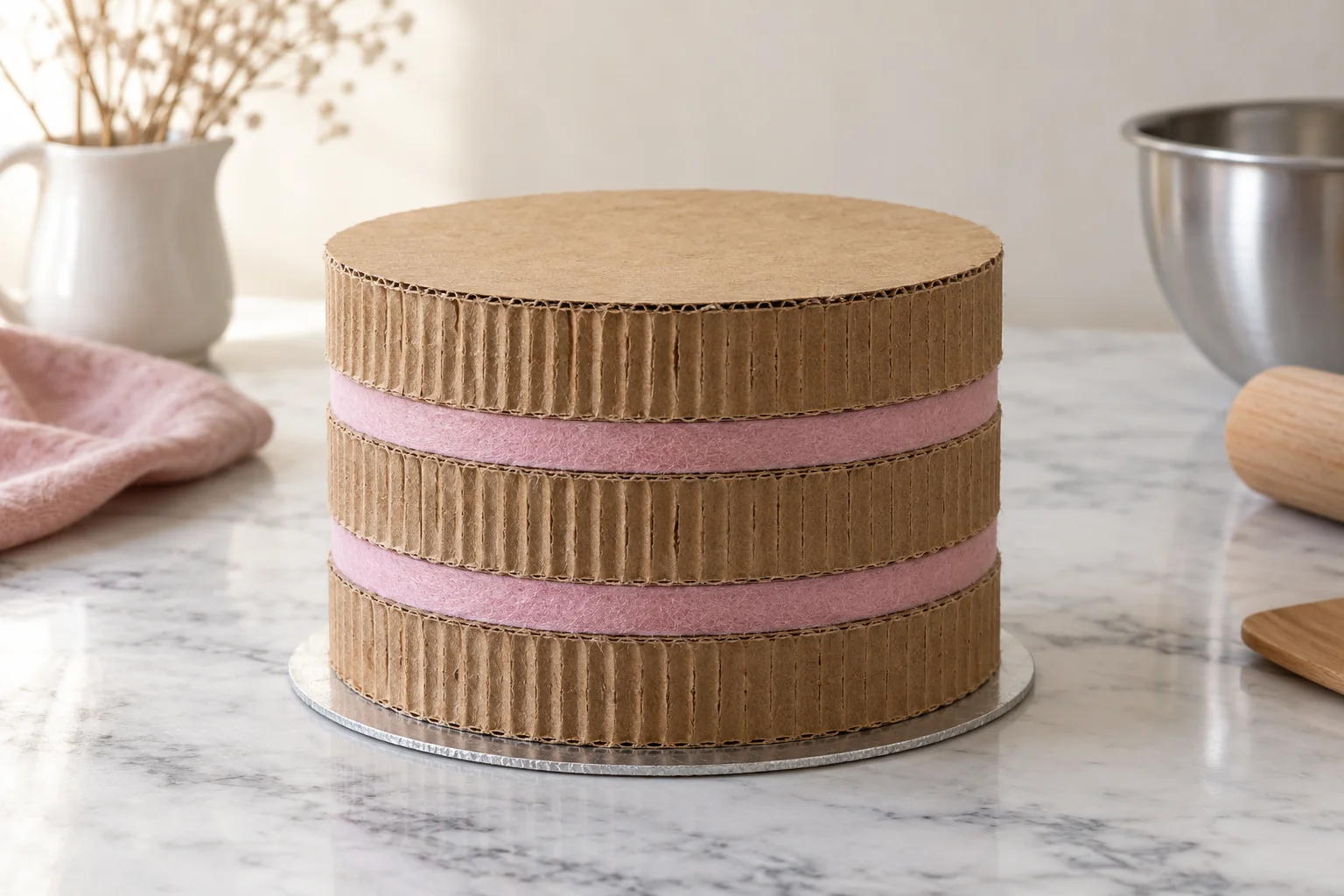
Stack the paper discs by inserting the colored strips. Observe the profile alignment, at eye level. Disc willfully drop: the mistake is seen right away, she will also see herself on the cake.
Placing dams
On the drawing, surround the filling of a cord to the edge. Note what toppings your project will need: all those that flow at room temperature.
Calculate the final height
Add thicknesses: 3 × 2,5 cm + 2 × 1 cm + 0,5 cm Cover ≈ 10 cm . Add the decor. Compare with the height of your box and refrigerator.
The right benchmarks
- Each layer of the drawing has a name, thickness and function.
- The number of toppings corresponds to the number of intervals between sponges.
- The soft trims are surrounded by a dam.
- The calculated final height is within the intended box.
If you miss the result
The word floor is used for each disc.
The gesture to be reviewed: Count the full cakes each placed on their cake board: three discs assembled form a single floor here.
The cover is seen as a way to correct the shape.
The gesture to be reviewed: Equalize sponges before mounting; the cream ends a shape already straight.
Cover too soft or too abundant, without dam.
The gesture to be reviewed: Reduce its thickness, put a dam of firm cream and check the texture before mounting.
Next: Next lesson: Compare the layer cake with classic cake and intermets to choose the right family of recipes.
Sources consulted: kingarthurbaking.com · kingarthurbaking.com
Progression recorded on this device.